Why is my AC running but not cooling?
Common causes are a dirty filter, an iced coil, low refrigerant or a failed outdoor fan or capacitor. Check the filter and outdoor unit, then turn the system off and ask a provider to look.
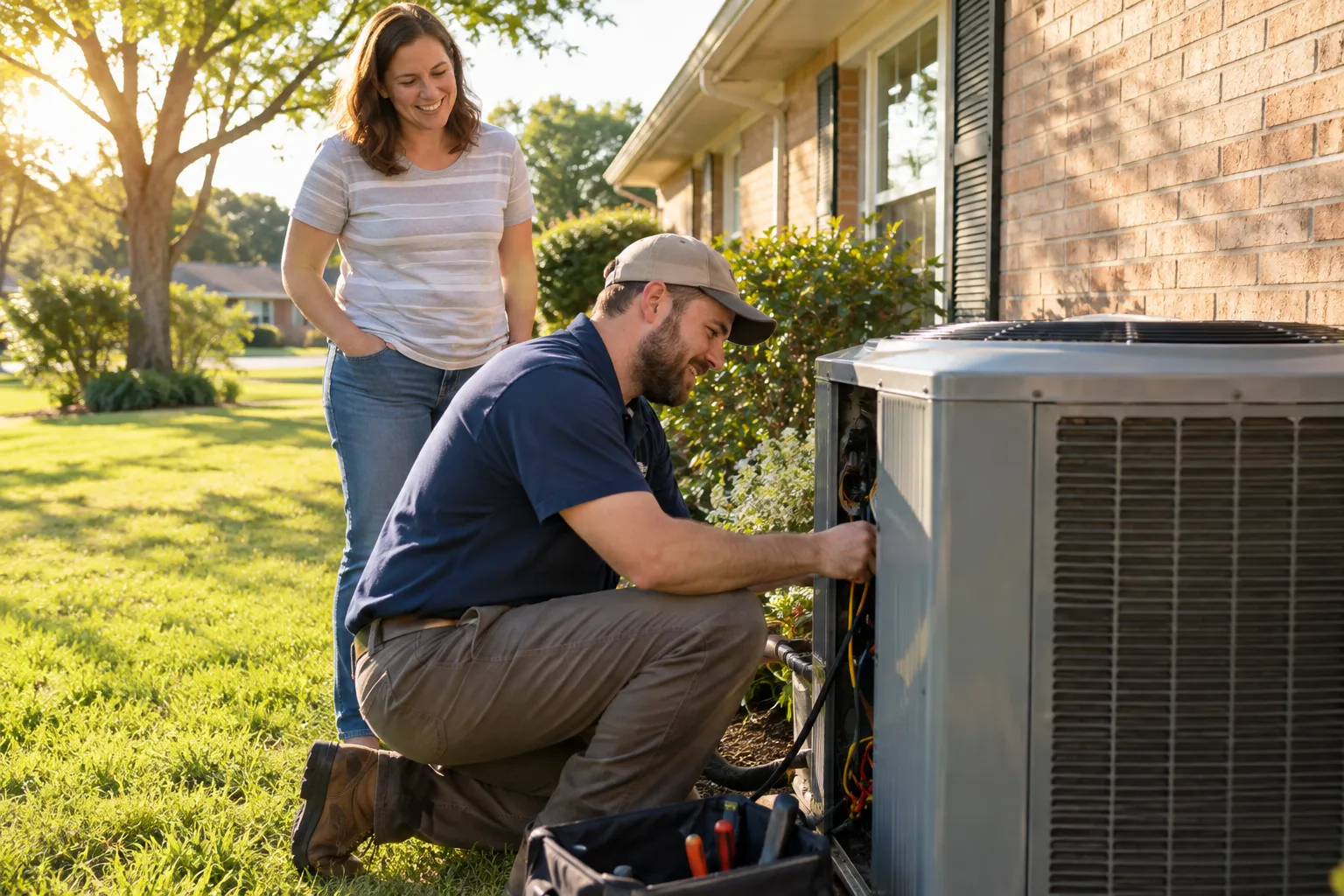
A broken AC is more than a hot afternoon. In the Lancaster area, summers are humid and attics get very hot. A dead system lets heat and moisture settle into the house fast. Answer first: shut the system off if it blows warm air, then get a provider to look at it.
Soundsinfo Heating & Air is a referral service. We do not repair air conditioners. You send your request, and Soundsinfo Heating & Air passes it to an independent local provider in our network. The provider diagnoses the problem, gives you a written quote, and does the work. This page explains the signs, the timeline, the typical costs, and the questions worth asking. Fix it right the first time. Cheap shortcuts tend to show up later, when a buyer's inspector looks at the system.
Set the thermostat to cool, a few degrees below room temperature. Then run the basic checks. They take about two minutes.
Still warm air? Turn the system off. Running a struggling AC can turn a small fix into a big one.
Timing changes the outcome. Here is the plain version.
The house warms up. Humidity climbs, and in a wet climate that happens fast. A hot attic pushes heat down through the ceiling. If the coil iced over, the ice melts and water can drip.
Damp air settles into carpet, drywall and wood. A musty smell can start. Sleep gets hard. Kids, pets and older relatives feel it first.
Mold can take hold on damp surfaces. Ducts can sweat. A part that ran hot for days can wear out the parts next to it. The house remembers. Stains and smells show up later, often at resale.
Treat it as urgent in these cases:
Request a callback to check provider availability. Many providers can respond quickly, but hours vary.
One sign is a reason to look. Two or three together mean do not wait.
The provider checks the thermostat, filter, coil, drain line, fans and electrical parts. They measure airflow and refrigerant pressure. Then they tell you what failed and what it costs. Ask for that in writing before work starts.
These small electrical parts start the motors. When they fail, the unit hums or will not start. They are a common, usually modest repair.
AC refrigerant does not get used up. Low levels mean a leak. Topping it off without finding the leak only buys a short break. Ask the provider where the leak is.
Dirty filters and blocked drains cause both. In humid weather the drain line works hard. A clog can send water into the ceiling or wall.
A failed fan motor is a common fix. A failed compressor is the big one, and it often starts the repair-or-replace talk.
A clean repair keeps moisture out of the walls and the ducts. A patch job hides the cause. Buyers' inspectors check the age and condition of the system. Records of proper repairs help show the home was kept up.
Repair usually makes sense when the system is fairly young and the fix is small. Replacement comes up when the unit is old, repairs keep stacking up, or the compressor is gone. A rough rule: if the repair is a large share of the price of a new system, compare both options in writing. Replacement has its own page on this site.
Heavy downpours and tropical storms can flood outdoor units and trip power systems. Power surges can damage boards and compressors. Hot attics also make ducts and indoor units work harder. After a storm, have the unit checked before you run it hard. Some policies may cover sudden damage, so check your policy. Providers can often help document damage for a claim.
Most homes use one HVAC service provider for heating and cooling. If you are also searching furnace replacement near me, that has its own page. For now, stay on the AC.
You send your request. Soundsinfo Heating & Air passes it to an independent local provider in our network. The provider contacts you, inspects the system and does the work. Soundsinfo Heating & Air does not do the repair.
The provider checks airflow, refrigerant, electrical parts and the drain line to find the real cause, not just the symptom.
Failed capacitors, contactors, fan motors and sensors can often be replaced on site.
Providers can locate refrigerant leaks and clear iced or dirty coils and blocked drains.
Ask for the repair cost in writing before work starts, so there are no surprises.
These are typical U.S. ranges. Your price depends on the part, the age of the unit, and how hard it is to reach. Always get a written quote from the provider before work begins.
| Repair item | Typical range | Notes |
|---|---|---|
| Diagnostic visit | $75 – $200 | Often credited toward the repair if you proceed. |
| Capacitor or contactor | $120 – $450 | Common electrical fix on hot-weather failures. |
| Drain line clearing | $100 – $350 | Prevents water damage to ceilings and walls. |
| Fan motor replacement | $300 – $900 | Indoor and outdoor motors differ in price. |
| Refrigerant leak repair | $250 – $1,600 | Depends on where the leak is and the refrigerant type. |
| Compressor replacement | $1,200 – $3,500 | Often triggers a repair-or-replace comparison. |
Tell us what the AC is doing and where you live. It takes about a minute.
Soundsinfo Heating & Air passes your request to a local provider in the network, who contacts you.
The provider inspects the system and explains the problem and the price.
Repairs start only after you agree to the written quote.
A proper repair keeps moisture out of walls and ducts, and shows a future buyer that the home was kept up.
Each hour of heat and humidity adds risk to drywall, floors and the system itself.
Providers in our network work in your area and know how heat and humidity affect homes here.
Send a request and compare the provider's quote. You decide whether to go ahead.
Tell us what is wrong with your AC or furnace. Request an estimate and a local provider in our network will follow up.
No obligationCommon causes are a dirty filter, an iced coil, low refrigerant or a failed outdoor fan or capacitor. Check the filter and outdoor unit, then turn the system off and ask a provider to look.
It depends on age and the repair price. A small fix on a fairly young unit is usually worth it. If repairs keep stacking up, ask the provider to compare repair and replacement in writing.
Send a request here, or request a callback to check provider availability. Many providers can respond quickly, but hours vary. Tell them about any burning smell, water leak or health concern.
Tell us what is wrong with your AC or furnace. Request an estimate and a local provider in our network will follow up.
No obligation